Main Menu


.png)




Why Does Power Generation Decrease When It Gets Hotter? — A Midsummer Maintenance Guide for Rooftop PV Systems

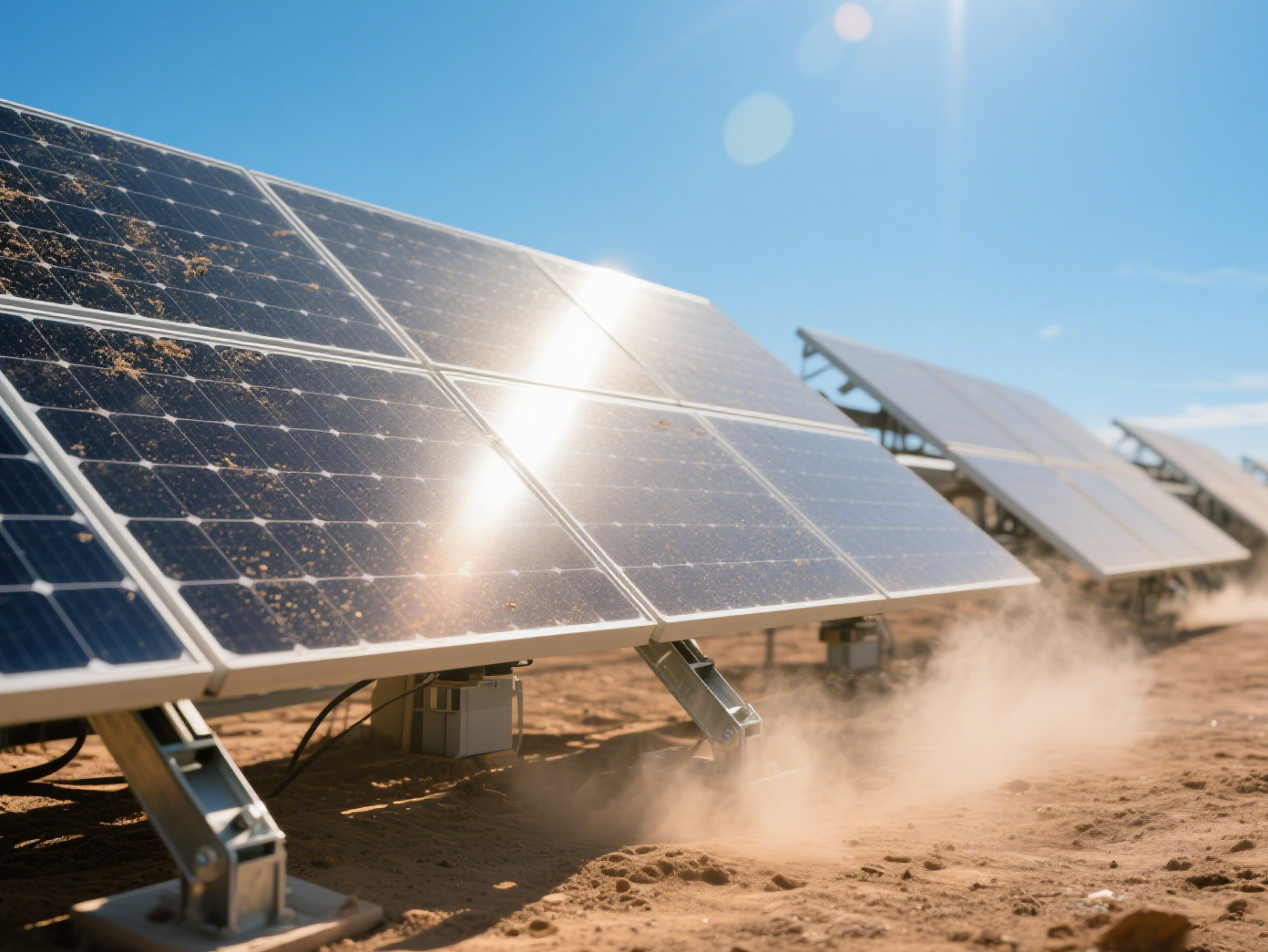
On a bright, sunny day with intense sunlight, the power generation of a PV system is actually 20% lower than expected! — This is a common confusion for many PV system owners in summer. High temperatures not only make people swelter but also cause PV panels to “suffer from heatstroke” and stop working. When cities continuously issue orange heat warnings and asphalt roads soften under the sun, the components of PV systems are also enduring a severe “heat test.” High temperatures silently “steal” power generation revenue while making life uncomfortable. This article will delve into the internal mechanism of how high temperatures affect PV systems and provide a midsummer survival guide for rooftop PV systems.
I.The PV Paradox Under High Temperatures: Stronger Sunlight = Lower Efficiency?
In public perception, PV power generation is directly linked to sunlight intensity, and people often assume that “the stronger the sunlight, the more power generated.” However, the actual operation of PV systems follows a completely different rule. PV power generation is based on the photovoltaic effect, where semiconductor materials absorb photons to generate electron-hole pairs, which form an electric current through a circuit. This process is extremely sensitive to temperature: research data shows that for every 1℃ increase in temperature, the output power of silicon-based PV modules decreases by 0.3%–0.5%.
Take a module with a nominal power of 400W as an example. Under the standard test conditions (STC) of 25℃, it can output its rated power at full load. But in direct summer sunlight, the surface temperature of the module can easily rise to 60℃. Calculated using the power attenuation formula, the actual output power of this module may drop to only 340W at this point, a loss of up to 15% compared to standard operating conditions. This power attenuation is not linear; when the temperature exceeds 70℃, the attenuation rate accelerates significantly.
Delving into the principles behind this:
- Material property limitations: High temperatures accelerate the recombination rate of electron-hole pairs inside semiconductors, reducing the number of carriers and thus lowering voltage output.
- Hot spot effect: This is an even more tricky issue. When parts of a module are shaded (e.g., by bird droppings or dust accumulation), the shaded cells switch from power-generating units to power-consuming units, generating local high temperatures. In severe cases, this can burn the cells and cause permanent shadow damage.
- System chain reactions: As the “heart” of a PV system, inverters see reduced performance of their electronic components and lower conversion efficiency in high temperatures. At the same time, high heat accelerates the aging of wire insulation layers, creating potential safety hazards.
II.Three “Invisible Paths” of Power Loss Caused by High Temperatures
- Decline in Module Efficiency
The nominal power of PV modules is measured in an ideal laboratory environment at 25℃. However, in actual outdoor operation, the surface temperature of modules often reaches 50–70℃. For example, at a desert PV plant in Saudi Arabia, the surface temperature of modules exceeds 75℃ at midday in summer, leading to a direct 30% drop in power generation compared to spring and autumn. This “high-temperature discount” not only affects daily power output but also significantly reduces the full-lifecycle revenue of the PV plant when accumulated over the long term.
- Soaring Maintenance Costs
High-temperature and arid regions face unique maintenance challenges:
- On one hand, frequent sand and dust storms cause rapid dust accumulation on module surfaces, severely reducing light absorption efficiency. However, frequent cleaning carries risks: spraying cold water on modules at high temperatures creates extreme temperature differences on the glass surface, which can easily cause the glass to crack.
- On the other hand, inverter failure rates surge in high temperatures. For instance, due to insufficient heat dissipation design, the annual maintenance cost of inverters at a large PV plant in India increased by 50%, and the additional maintenance expenses severely squeezed the plant’s profit margins.
- Long-Term Risk of Shortened Lifespan
High-temperature damage to PV modules is a gradual process:
- When exposed to long-term high temperatures, the EVA film (a packaging material) accelerates yellowing and loses its ability to protect the cells.
- The backsheet of the module also cracks due to frequent expansion and contraction from temperature changes, allowing moisture and oxygen to seep in and accelerating internal aging of the module.
Industry research shows that long-term high-temperature environments can shorten the expected lifespan of PV modules from 25 years to 15 years. For PV projects with long investment return cycles, this is undoubtedly a huge economic loss.
III. Cooling and Protection Strategies for PV Panels
- Passive Cooling: Low-Cost “Physical Enhancements”
Simple design optimizations in passive cooling can yield significant results:
- Light-colored brackets: These effectively reflect ground radiation. Research data shows that dark-colored ground can be 20℃ hotter than light-colored ground under sunlight, so light-colored brackets help lower the ambient temperature around modules. For example, after changing bracket colors from black to white at a PV plant in Arizona, USA, the average surface temperature of modules decreased by 5℃, and annual power generation increased by 3%.
- Proper ventilation design: PV plants in the Middle East generally use elevated structures, installing modules at a height of over 2 meters. This leverages natural wind to accelerate air circulation and dissipate heat from module surfaces, reducing module temperatures by 5–8℃ (measured in practice). Some plants also adopt ventilation corridor designs, leaving gaps of a certain width between module arrays to guide air flow and enhance heat dissipation. For instance, at a PV plant in Dunhuang, Gansu Province, China, the construction of ventilation corridors reduced module temperatures by 8℃ and improved power generation efficiency by 4%.
- Active Cooling: Supported by Advanced Technology
Active cooling technologies offer stronger temperature control capabilities:
- Drip irrigation water cooling systems: A large PV plant in Dubai uses this system, which drips water evenly on module surfaces. Heat is dissipated through water evaporation, increasing power generation by 12% (measured in practice). The system consists of water supply pipes, drippers, and a control system that automatically adjusts water flow based on module temperature. However, this technology requires balancing water consumption and is suitable for regions with relatively abundant water resources or desalination facilities. Some PV plants in Qinghai, China, have also tested similar water cooling technologies combined with rainwater collection systems to reduce reliance on external water sources.
- Phase-change materials (PCMs): A coating containing substances like paraffin is applied to the back of modules. When temperatures rise, the PCM absorbs heat and undergoes a phase change to store the heat; when temperatures drop, it slowly releases the heat. This technology is currently in the laboratory verification stage. A research team at Stanford University (USA) developed a new PCM with a phase-change temperature range of 40–60℃, which exactly matches the high-temperature operating range of PV modules. Experiments show that using this PCM reduces module temperatures by over 10℃ and improves power generation efficiency by 8%.
- Material Innovation: High-Temperature-Resistant Modules
In the field of PV materials, researchers are continuously exploring new high-temperature-resistant cell technologies:
- Perovskite cells: With their unique crystal structure, perovskite cells have a temperature coefficient only 1/3 that of silicon-based cells, resulting in slower power attenuation in high temperatures. The adjustable bandgap of perovskite materials allows them to better adapt to different light conditions and reduce the impact of high temperatures on performance. However, the stability of perovskite cells has not yet been fully resolved—their performance attenuation under long-term light and high temperatures remains a key barrier to commercial application. Currently, researchers are improving stability through interface engineering and packaging technologies, and lab-prepared perovskite modules have achieved 1,000 hours of continuous operation without significant attenuation.
- Heterojunction (HJT) modules: These have already emerged in the market. Compared to traditional PERC modules, HJT modules experience less power attenuation in high temperatures. However, due to complex production processes, their current cost is still 20%–30% higher than conventional modules. HJT modules use a heterostructure of amorphous silicon and crystalline silicon, offering advantages such as a low temperature coefficient and high open-circuit voltage. HJT modules produced by Panasonic (Japan) have a power attenuation of only 8% at 70℃, while PERC modules show 15% attenuation under the same conditions. With technological advancements and large-scale production, the cost of HJT modules is expected to decrease further, making them a preferred choice for PV projects in high-temperature regions.
IV.How Can PV System Owners Tackle High-Temperature Challenges?
- Site Selection Stage
When selecting a site for a PV project:
- Avoid low-wind-speed areas and prioritize terrain with natural ventilation. For example, in mountainous areas, the valley wind effect can be utilized: slopes heat up quickly during the day, causing air to rise and form valley winds; at night, slopes cool down quickly, causing air to sink and form mountain winds. This day-night alternating air movement helps dissipate heat from modules. In coastal areas, sea-land breezes can be used for cooling: during the day, land heats up faster, and air flows toward the sea to form sea breezes; at night, land cools down faster, and air flows toward the land to form land breezes.
- Stay away from large areas of cement-hardened ground, as such areas form a “heat island effect” in high temperatures, exacerbating module heating. For example, when building PV plants near cities, choose green spaces or farmland instead of high-temperature areas like industrial parks or parking lots.
- Equipment Selection
- Modules: Carefully review product manuals and select modules with a temperature coefficient ≤ -0.35%/℃. These modules have relatively small power attenuation in high temperatures; although their initial purchase cost may be slightly higher, they offer better cost-effectiveness in terms of long-term revenue. For example, a high-efficiency module from a certain brand has a temperature coefficient of -0.32%/℃—compared to ordinary modules (-0.45%/℃), each module outputs 12W more actual power at 60℃.
- Inverters: Focus on high-temperature resistance and heat dissipation design, and select products with intelligent temperature control. Some high-end inverters are equipped with smart fans and heat sinks that automatically adjust heat dissipation intensity based on internal temperature, ensuring stable operation in high temperatures.
- Intelligent Maintenance
- Infrared thermal imaging cameras: Introduce these devices to monitor the risk of module hot spots in real time. They can quickly detect areas with abnormal temperatures without contacting the modules, with an accuracy of ±0.5℃. When paired with an intelligent maintenance system, they automatically generate fault early-warning reports to guide maintenance personnel in addressing hazards promptly. For example, a PV plant detected and resolved 15 hot spot hazards within one month by installing an infrared thermal imaging monitoring system, avoiding module damage and power generation losses.
- Drone inspections: These are an effective way to improve maintenance efficiency. Drones can quickly cover large-area PV plants, equipped with high-definition cameras and thermal imaging devices to conduct comprehensive inspections of modules. Through image recognition technology, they can also automatically identify dirt such as dust or bird droppings on module surfaces and generate cleaning plans.
A practice from an Australian farm is particularly instructive: they grow shade-tolerant crops under PV modules. This not only provides shading and cooling but also increases additional income through agricultural cultivation, achieving the economic benefit of “dual use of one land.” The strawberries and mushrooms grown on the farm thrive under the shade of PV modules, generating over 5,000 yuan (RMB) in agricultural income per mu (a Chinese unit of land area, approximately 0.067 hectares).
Conclusion: High Temperatures Are Not a “Dead End” but a Driver of Technological Evolution
From micro-level breakthroughs in materials science to macro-level innovations in systems engineering, the PV industry is overcoming the “high-temperature curse” through interdisciplinary collaboration. As technologies such as perovskite and PV-thermal (PVT) cogeneration mature, high-temperature environments may no longer be a barrier to PV development but instead an opportunity to tap into energy potential. For example, PVT cogeneration systems can collect excess heat generated by PV modules for heating or power generation, improving overall energy utilization efficiency. In a pilot project, a PVT cogeneration system increased comprehensive energy utilization efficiency by over 30%.
If you are a PV system owner, focus on power generation during morning and evening hours. Temperatures are lower at these times, so module efficiency is at its daily peak, while light intensity still meets power generation needs. Seizing these two “golden periods” can effectively increase daily power output. Additionally, regularly check plant monitoring data and compare power generation efficiency across different time periods to identify potential equipment issues promptly. It is recommended to generate a power generation data report weekly, analyzing the relationship between power generation and factors such as temperature and light to adjust maintenance strategies. At the same time, maintain communication with equipment suppliers and industry experts to stay updated on the latest technologies and solutions, helping your PV system survive the sweltering midsummer smoothly.